Let's name the thing that's actually happening
You're not broken. You're not "taking too long." And you're definitely not the only person this happens to. The gap between what your body can do alone and what it can do with someone watching is one of the most common friction points I see in couples therapy, and it's almost never about the body itself.
It's about your nervous system. When you're alone, you're in parasympathetic mode. You're safe. You know exactly what turns you on. You can breathe. Your pelvic floor stays relaxed. Then a partner arrives, and suddenly your brain is running multiple programs at once: arousal, self-consciousness, performance anxiety, and the very human fear that you're taking too long or doing something wrong. Your nervous system switches to sympathetic activation, which is fancy neuroscience for "fight or flight," which is the exact opposite of what you need to come.
Why the presence of a partner changes everything physiologically
This isn't a psychology problem first. It's a physiology problem.
When someone else is present, several things happen almost simultaneously. Your amygdala (the threat-detection part of your brain) lights up. Not because your partner is a threat, but because you're suddenly being observed, and your primitive brain registers observation as potential danger. Your breathing becomes shallower. Your pelvic floor muscles tighten preemptively. Blood flow redirects away from your genitals toward your large muscle groups (shoulders, legs, arms), which is useful if you need to run, but absolutely useless if you need to relax into an orgasm.
Meanwhile, your frontal cortex (the thinking, worrying part) is hyperactive. You're monitoring your partner's face. Are they enjoying this? Am I taking too long? Should I be louder? Quieter? Your attention is split between sensation and surveillance.
None of this is your fault. It's a feature of your nervous system that served your ancestors well. It kept them aware. It kept them safe. It's just not compatible with orgasm.
The specific problem with penetrative sex alone
If you've only had partnered sex that centers penetration, there's an additional layer. Penetration is designed for someone else's pleasure, anatomically speaking. The angle, the speed, the depth. all of it is determined by your partner's body or preference, not yours. You're in a reactive position, not an active one.
The clitoris, which is where most orgasms actually happen, is rarely the center of attention in penetrative sex. So you've built years of muscle memory around climaxing solo because that's the only time your clitoris gets direct, sustained attention.
What lemon clitoral vibrators actually do differently
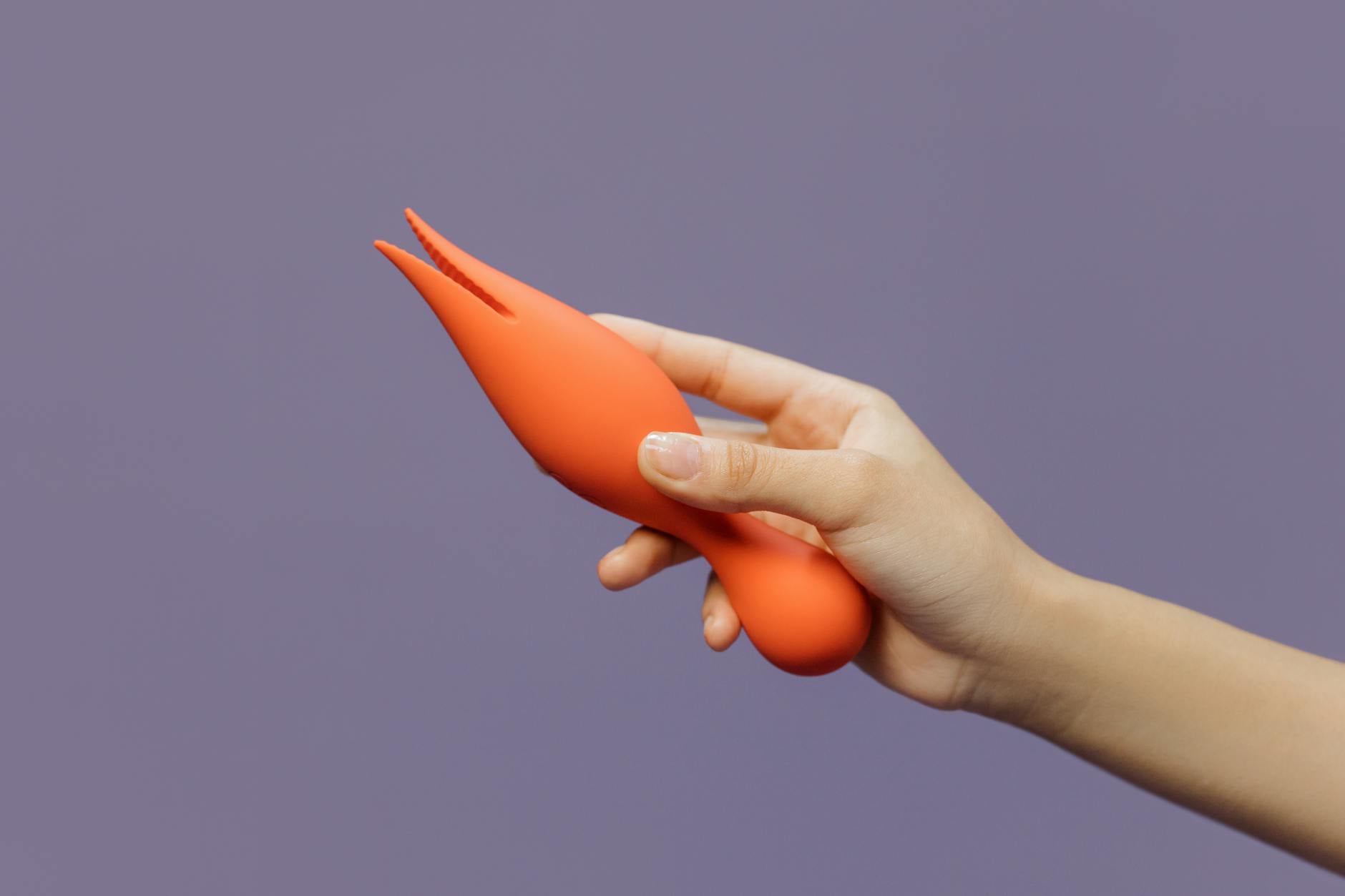
Here's where air-suction technology changes things. The Lem and other clitoral vibrators using this mechanism don't vibrate. They pulse. The sensation is gentler, more diffuse, and oddly, less mentally demanding. Your brain gets less stimulation noise and more signal.
When you're using a lemon clitoral vibrator with a partner, two specific things shift. First, you're in control. You're holding it. You're choosing the intensity. Your partner is not doing something to you. They're present, but the locus of control stays with you. That matters for your nervous system.
Second, the sensation profile itself is less jarring. Lemon sucker technology (air-pulse suction) mimics the kind of stimulation that often works in solo sessions but scales it in a way that's compatible with the presence of another person. It's consistent. It doesn't require you to hold tension. It lets you relax into it.
The mental game: what you actually need to shift
The tool is only half the equation. The other half is permission.
You need to tell your partner, out loud, before you start: "I need to come alone first, or with this tool, and I need you to understand that it's not about you." That sentence does something important. It moves the failure point from "I'm broken" to "Here's what my nervous system needs."
Many partners feel rejected when their partner can't orgasm with them. They internalize it. So you're carrying both your own performance anxiety and their hurt feelings. Naming it separately removes the shame from the equation.
Then, practically: use the lemon vibrator early, when you're still building arousal. Not at the end as a backup plan. Make it part of the journey, not a rescue. Your partner can be touching you elsewhere. Kissing you. Inside you, if that feels good. But the clitoral vibrator stays in your hand, on your terms.
Why this specific pathway works for nervous systems
When you're using a clitoral vibrator that you control, your nervous system has a clear job: focus on sensation, not surveillance. You're not trying to watch your partner's face and also relax your pelvic floor. You can close your eyes. You can breathe. You can move your hips in whatever pattern feels right.
And here's what I see happen repeatedly: once you've had one orgasm with your partner present, your nervous system starts to reclassify the situation. He's not a threat. She's not a judge. They're a collaborator. The next time, it's easier. The time after, easier still.
The conversation you probably haven't had yet
Most couples I work with never actually talk about this directly. They dance around it. "Maybe we should use a toy," said as a question when you already know the answer. "Only if you want to," said as a compromise when what you need is permission.
Try this instead: "I've never come with someone else in the room, and I want to. I'm going to use my lemon vibrator, and I need you to know it's not because you're not enough. It's because my nervous system needs this to work. Will you help me create the conditions where this can happen?"
From there, the practical things unfold. Fewer distractions. Maybe dimmer light. Maybe you're less clothed than he is, so there's visual asymmetry that helps. Maybe he watches only when invited, not constantly.
What happens after you break through
What I see in the months after someone has their first partnered orgasm is remarkable. The anxiety doesn't disappear entirely, but it recontextualizes. You've proven to your nervous system that it's safe. You've shown your partner what you need. You've built a blueprint.
Many people find that once they've come with their partner present using a clitoral vibrator, they eventually come without it. Not because the vibrator was a "training wheel" (that language is weirdly judgmental), but because your partner is no longer coded as a threat. The nervous system relaxes. Arousal flows. The tool becomes optional rather than essential.
Some people never stop needing it, and that's fine too. There's no finish line here.
When to bring in more support
If you're doing all of this and still hitting a wall, check two things. First, is the relationship itself safe? If you don't trust your partner, your body will know. Therapy, honest conversation, or sometimes ending the relationship is the first step.
Second, is there trauma living in your body? If you've experienced sexual coercion, assault, or even just a string of partners who weren't careful with you, your nervous system might be hypervigilant in a way that no lemon vibrator can override. That's when somatic therapy or trauma-informed sex coaching becomes the real solution.
The simple version
You've mastered solo orgasm. That's a superpower. Now you're trying to bring that superpower into partnership. It requires a tool that gives you control, a conversation that gives you permission, and a nervous system that gradually learns it's safe. The Lem and other lemon clitoral vibrators are built for exactly this job. They're not a substitute for your own pleasure. They're a translator between your solo certainty and your partnered doubt.