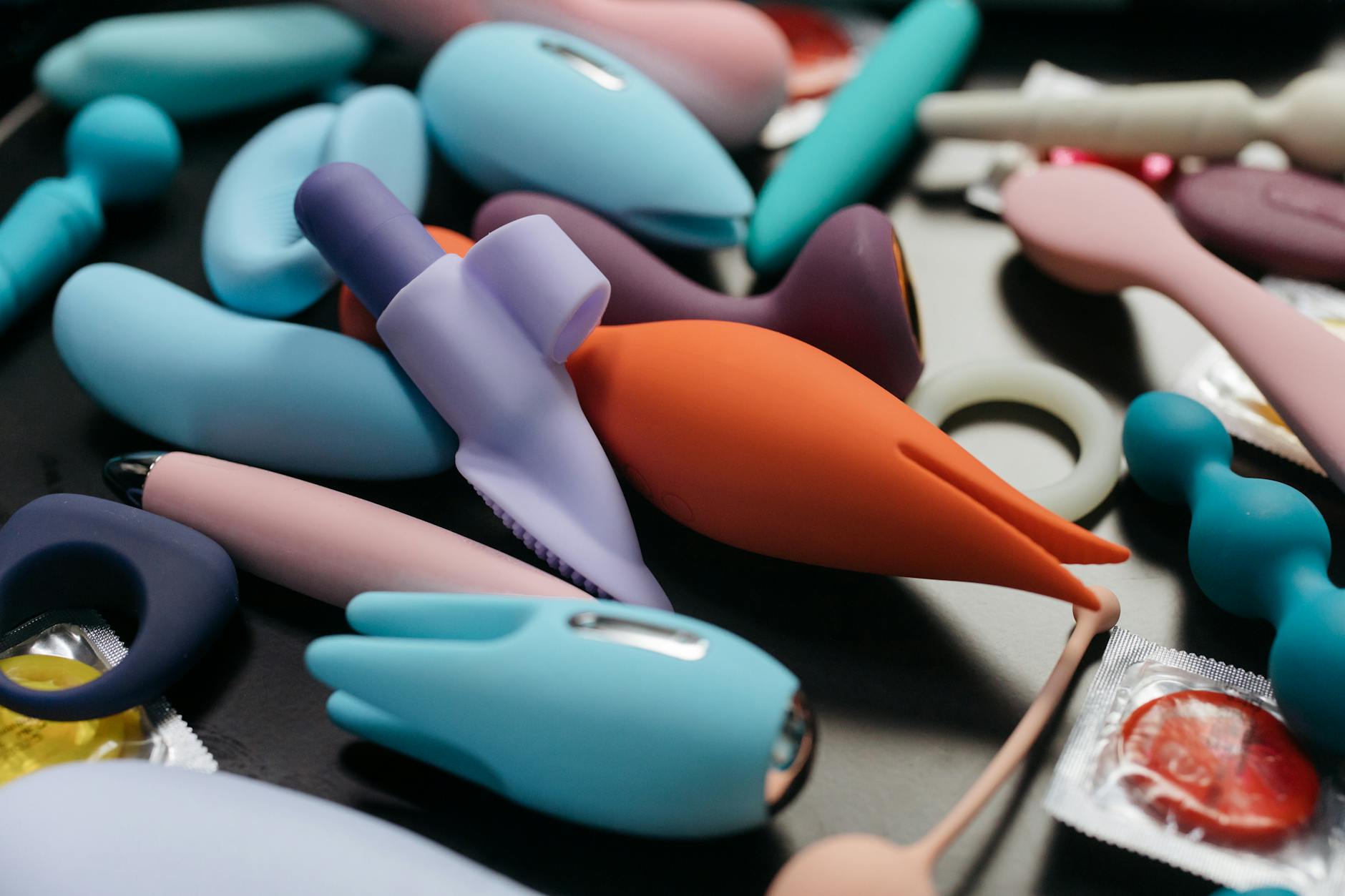
Let's talk about the paralysis
Honestly? The hardest part of buying your first lemon vibrator isn't the commitment or the embarrassment. It's the sheer number of options that suddenly exist once you start looking. Intensity levels, motor types, noise profiles, charging systems, shape variations. By the time you've scrolled through even a few pages, your brain has checked out and you're back where you started: wondering if you should just skip it.
I'm going to walk you through what actually matters when you're choosing your first clitoral vibrator, and what you can safely ignore.
The thing nobody tells you: vibration isn't one thing
Here's where most buying guides fall apart. They talk about "vibration intensity" like it's a dial from 1 to 10. In reality, intensity is the least important variable for a first-time user. What matters is the quality of the vibration and the delivery method.
Lemon vibrators work through either traditional vibration or air-suction stimulation. These feel wildly different, and your body might have a strong preference before you even try one.
Traditional vibration sends oscillating pulses directly to the clitoral tissue. Air-suction (also called pulse-suction) creates gentle waves of pressure and release. For many first-time users, suction feels less intense and more intuitive. It's gentler on sensitive tissue, and it doesn't require you to hold it perfectly still to feel the effect.
If you've never used a vibrator before, start by asking yourself: Do I usually prefer direct stimulation or something more diffuse? Do I like consistent pressure or rhythmic waves? Your answer points you toward one method or the other.
Why material actually changes everything
The second thing that gets glossed over is material safety. Your clitoris is sensitive and permeable, which means what you put against it matters medically, not just comfort-wise.
Medical-grade silicone is the gold standard. It's non-porous (bacteria can't hide in cracks), it's hypoallergenic, and it doesn't degrade over time. If a vibrator is cheap and made of PVC or "jelly rubber," it's porous and can harbor bacteria. That's not fear-mongering. That's basic material science.
When you're evaluating options, check the product description for material. If it says silicone without qualification, that's good. If it says "body-safe silicone" or "medical-grade silicone," that's ideal.
Bonus: silicone is also easier to clean (just warm water and soap, or a toy cleaner), and it pairs safely with water-based lube, which is what most first-time users end up preferring anyway.
Size and ergonomics deserve real thought
Smaller doesn't mean less intense. The Lemon Clitoral Vibrator at $89 is compact enough to fit in a clutch, but its motor is powerful. Size is about what your hand can comfortably hold for 10-20 minutes, and whether you want something you can take with you or prefer something larger that feels more intentional to use.
Think about your hand size and grip strength. If you have small hands or arthritis, a bulky wand vibrator might be frustrating to hold. If you like something sturdy that feels good to grip, a narrower bullet might feel insubstantial.
Ergonomics also includes the control interface. Some vibrators have buttons on the handle. Others have a separate remote. Some have a simple on/off and a single intensity dial. Others have patterns. For your first vibrator, fewer controls is actually better. You want to focus on sensation, not menu navigation.
Noise level is not a luxury consideration
If you live with roommates, share a bedroom with a partner, or have thin walls, noise matters. Suction vibrators are typically quieter than traditional vibrators. Within traditional vibrators, smaller motors are quieter than larger ones, but less powerful.
There's no shame in factoring in your living situation. This isn't about being prudish. It's about actually being able to use your vibrator without stress. A tool you're too embarrassed to use is a tool that sits in a drawer.
If silence is critical, air-suction lemon vibrators are your answer. They run at conversation volume at most, and usually much quieter.
Battery life and charging: the unsexy detail that matters
Does your vibrator charge via USB, battery compartment, or proprietary charger? USB is the most convenient because you probably already have cables everywhere. Battery compartment means replacing AAAs, which costs money and means you need batteries on hand.
How long does it run on a single charge? For a first vibrator, aim for at least 60 minutes of runtime. You want to use it multiple times before worrying about recharging.
Is the battery rechargeable or single-use? Rechargeable is better for the environment and your wallet. Single-use might be cheaper upfront but becomes expensive and wasteful over time.
Vibration patterns: useful or distraction?
Many vibrators come with multiple patterns. Pulse, wave, escalation, random. It sounds great in theory. In practice, for a first-time user, more patterns often means more confusion.
You don't need 12 patterns. You need to find the one pattern that feels good to you, and then get comfortable with it. Patterns can be fun once you know your body's response. Starting with a simple vibrator that has one or two patterns lets you actually learn what you like instead of constantly chasing novelty.
If you're shopping and find yourself drawn to a vibrator with tons of patterns, ask yourself honestly: would you actually use them, or would you default to the same one each time? Your honest answer tells you whether to spend extra for features you won't need.
The intensity creep problem
Here's something counterintuitive: many first-time users buy a vibrator that's too powerful and then avoid it because it feels overwhelming. Your clitoris is sensitive. It's got more nerve endings per square centimeter than almost anywhere else on your body. You don't need maximum intensity.
When you're comparing options, look for mid-range intensity, not top-of-the-line power. A vibrator with 5 intensity levels is better than one with 15 where the lowest setting is still kind of intense. You'll actually use something that meets you where you are instead of something that forces you to adapt.
The flip side: if you know from other experiences that you need significant stimulation to reach orgasm, don't undersell yourself into a weak vibrator. But if you're unsure, start lower and build up.
Price anchors and what's worth the money
You can find vibrators from $20 to $300+. The cheapest options usually cut corners on motor quality, material safety, or both. The most expensive often add features (patterns, app control, designer packaging) that don't change the core experience.
For your first vibrator, the sweet spot is $65-$95. At that price point, you get medical-grade silicone, a reliable motor, straightforward controls, and good construction. You're not overpaying for luxury bells and whistles, and you're not gambling on material safety.
The Lemon Clitoral Vibrator falls in this range and uses air-suction delivery, which most first-time users find intuitive. But there are other quality options at this price. The investment is low enough that you're not terrified to use it, but high enough that it's actually well-made.
Brand reputation matters more than you think
Read reviews, but read them for patterns, not individual opinions. One person saying "it wasn't for me" tells you nothing. Three people saying "the motor died after three months" tells you something. Look for mentions of durability, customer service responsiveness, and whether people actually recommend it to friends.
Domestic brands with actual customer service are worth favoring over dropshippers who disappear if something breaks. If you need help or have a defect, you want to be able to reach someone.
The conversation with your partner (if applicable)
If you're in a relationship, telling your partner you're thinking about getting a vibrator is different from surprising them with one. Some people feel insecure thinking their partner needs a toy. Some feel relieved. Some want to be part of the shopping process.
The framing matters. "I want to explore my own pleasure more" is different from "you're not doing this right." One starts a conversation. The other starts a fight. If you're coupled, how to use lemon vibrators when you have mismatched arousal speeds with your partner covers navigating that dynamic specifically.
What to do right before you order
Write down your actual preferences in three categories: sensation (direct or diffuse), environment (solo or partnered, noise considerations), and practical (budget, charging preference, size). Then scan a few options against those three criteria. Don't overthink. You're not choosing a life partner. You're choosing a tool. If it doesn't work out, you'll know better next time.
Questions people actually ask
Can you use a lemon vibrator during menstrual periods?
Absolutely. Some people find that vibration actually helps period cramps because it relaxes the pelvic floor muscles that tighten during menstruation. If anything, the additional blood flow to the area makes sensation feel different, sometimes more intense. Use whatever lubrication you're comfortable with (water-based is easiest to clean), and know that period blood is just blood. It's not going to damage your toy or your body.
Is it weird to use a vibrator if I've never had an orgasm?
No. Actually, a vibrator is often the fastest way to figure out if orgasm is physically possible for you or if there's something else going on (like medication effects, hormonal issues, or pelvic floor tension). How to use lemon vibrators for better sensation when clitoral feeling goes numb addresses numbness specifically, but the same principle applies: a vibrator is a diagnostic tool as much as a pleasure tool.
What's the difference between a suction vibrator and a regular vibrator for beginners?
Suction vibrators (like air-suction models) create a gentle pulsing pressure without direct friction. Regular vibrators vibrate directly against tissue. For most first-time users, suction feels less intense and easier to control. It's harder to overstimulate, and the sensation ramps up more gradually. If you're nervous, suction is the safer bet.
Should I start with a smaller vibrator or a larger one?
Start with whatever size feels good in your hand when you imagine holding it. That's genuinely the deciding factor. Smaller is easier to travel with and position precisely. Larger often feels more substantial and is easier to hold steady if you have grip issues. There's no one answer.
How do I know if a vibrator is actually waterproof or just splash-resistant?
Look for the rating. Waterproof means fully submersible. Water-resistant or splash-proof means it handles splashing but shouldn't be submerged. If the listing doesn't specify, ask before buying. Some vibrators advertise as waterproof but have openings that aren't sealed well. Read recent reviews specifically asking about shower use.
Is it normal to feel self-conscious about buying a vibrator?
Completely normal. You've probably absorbed decades of messages that sexual pleasure is either something that happens to you or something you should be ashamed to pursue actively. A vibrator is you saying, "I deserve to feel good." That's not selfish. That's self-respect. And once you've ordered it, the self-consciousness usually evaporates the moment you actually use it and realize it just feels good. No moral judgment. Just sensation.
The actual next step
You don't need to agonize over this choice. Pick something made of medical-grade silicone in a size and style that appeals to you, at a price you're comfortable with. Use it. Notice what feels good. Adjust. That's the whole process. Your first vibrator doesn't need to be perfect. It just needs to be a starting point for learning what your body actually responds to when you pay attention.