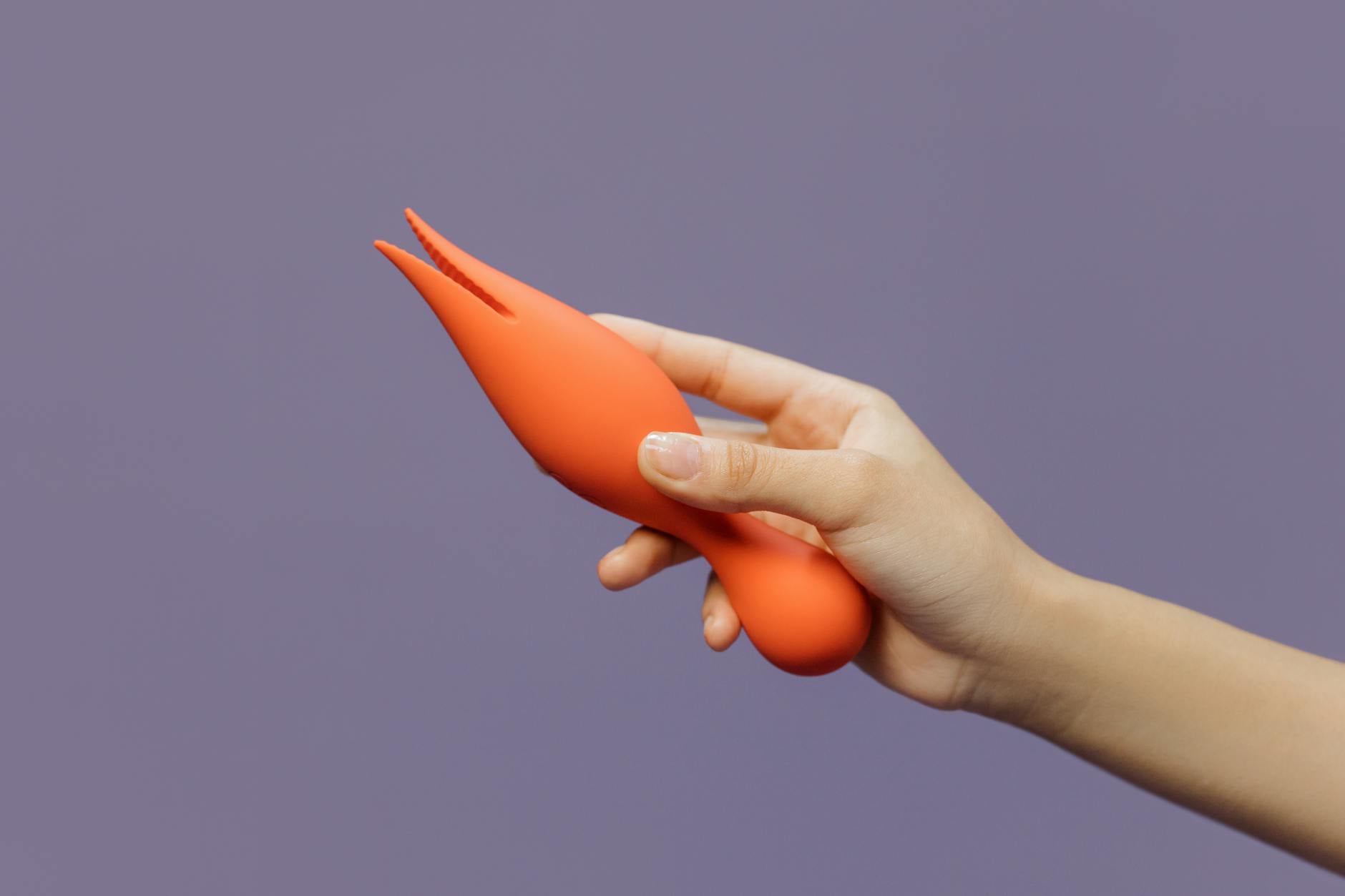
How to Use Lemon Vibrators if You're Struggling With Low Desire in a Long-Term Relationship
When passion fades after years together, your body doesn't need fixing. It needs permission, novelty, and the right kind of stimulation to wake back up.
Let's be real. The first year or two of a relationship? Your nervous system is on fire. You think about sex constantly. Touch feels electric. Then five years, ten years, fifteen years in. You love your partner. You're happy. But somewhere between the mortgage conversations and the routines that actually keep life running smoothly, desire just... quieted down. For a lot of people, it practically vanished.
Here's what I've learned from years of working with couples: low desire in long-term relationships isn't a sign that something broke. It's a sign that novelty did. And novelty is something you can deliberately rebuild. This is where lemon vibrators, and specifically lemon clitoral vibrators, change the equation entirely.
Three things happen simultaneously when you've been with someone for years.
First, habituation. Your brain stops registering your partner's touch as novel. The same kiss, the same caress, the same rhythm becomes background noise. Neuroscience is pretty clear on this: novelty triggers dopamine. Predictability does not.
Second, you develop a narrative about sex with this person. You know what's coming. You know how long it'll take. You know what position you'll end up in. That predictability can feel safe, but it also kills the anticipatory arousal that actually starts the whole process.
Third, and this is the part nobody talks about enough: when desire is low, the pressure to perform sexually increases. Your partner notices. You notice. You both start trying harder, which paradoxically makes the whole experience feel like work instead of pleasure. And when sex feels like work, desire doesn't come back. It goes deeper underground.
A lemon clitoral vibrator isn't a Band-Aid on the relationship. It's not a backup when your partner can't get you there. It's permission to rebuild your own arousal system, independent of your partner's presence or performance.
Here's why that matters. When you've been with someone for years and desire is low, you've probably built up a belief that you're "not a sexual person anymore." You've accepted that your body doesn't respond like it used to. A lemon vibrator proves that's not true. Your body responds perfectly fine to the right kind of stimulation. What changed wasn't your capacity. It was the stimulus.
A lem vibrator delivers sensation that's genuinely different from what most long-term partnerships provide. The suction technology targets nerve density in ways that conventional vibration doesn't. For someone whose arousal system has gone quiet, that novelty matters. It wakes something up.
I know the instinct is to bring the vibrator into partnered sex immediately. Don't. The first phase is solo.
Set aside 20 to 30 minutes when you have privacy and no time pressure. This is not about achieving an orgasm. This is about rebuilding the neural pathways that connect physical sensation to pleasure. Your nervous system has been running in a low-arousal state for so long that it needs time to remember how to ramp up.
Start at pattern 1 or 2 on the lem vibrator. Don't jump to intensity. Let your body get comfortable with the sensation. This might take three, four, five sessions before anything shifts. That's normal. You're not broken. You're retraining.
The key thing here is that you're doing this for yourself, not for results. If you approach it as "I need to fix my desire," you've already made it a performance task. Instead, approach it as "I'm curious what my body responds to." That permission shift is half the work.
Lots of people buy couples vibrators thinking that's the move. A vibrator designed for partnered use, something you share. But here's the problem: if your baseline arousal is already low, adding someone else's pressure and expectations into the equation doesn't help. It makes it harder.
When you explore solo with a lemon clitoral vibrator, you get to set the pace. You get to discover what pattern actually feels good to you, which most people don't know after years of routine partnered sex. You get to feel pleasure without the secondary task of managing someone else's experience.
Once you've done that solo work and you genuinely feel your own arousal returning, then partnered exploration becomes different. You're not trying to fix anything. You're sharing something you've already reclaimed. That's a completely different energy.
A lot of people ask me: how often should I use the vibrator? The answer depends on where your desire is right now.
If it's completely flatlined, start twice a week. That gives your nervous system time to notice a pattern without turning it into another obligation. Twice a week for three to four weeks, then reassess.
If you're starting to notice some baseline arousal returning, you can scale back to once a week or use it more intuitively. The goal isn't frequency. The goal is rebuilding your relationship with your own pleasure.
One thing I always tell couples: don't use the vibrator right before or right after trying partnered sex. That timing creates a comparison dynamic. "Well, I came with the vibrator but not with my partner." That narrative will kill the progress you're making. Instead, separate them. Use the vibrator on Tuesday. Have sex with your partner on Thursday. Let each experience exist on its own.
Eventually you'll want to tell them. Here's how not to do it: don't frame it as "my pleasure is broken and I'm trying to fix it alone." That lands as rejection, even though that's not what you mean.
Instead, try something like: "I've noticed my arousal has been quiet, and I'm doing some solo exploration to reconnect with my body. I'm not looking for anything from you right now except patience while I figure this out." Full stop. That's all you need to say.
Most partners, if they love you, will be relieved. They've probably been feeling the low-desire energy too and blaming themselves. When you reframe this as personal exploration rather than a relationship problem, the whole dynamic shifts.
Once you've done the solo work and you're genuinely feeling more aroused, then you can have a conversation about whether you want to integrate it into partnered sex. But you don't owe that conversation upfront. Your pleasure is yours first.
After four to six weeks of consistent solo use of a lemon vibrator, most people report three things.
First, you start thinking about sex more often. It comes back into your awareness. You notice attraction again. You start having fantasies. That's your dopamine system waking up.
Second, your partner will probably notice you seem happier. You're less resentful about the flatness of desire. You're not carrying the shame of "I'm not a sexual person anymore." That lightness changes the whole dynamic of the relationship, whether or not you're having more sex.
Third, and this is the part that surprises most people: when you do have sex with your partner again, it feels different because you're different. You're not going through the motions. You're not trying. You're actually present. And presence is what arousal actually needs.
If your desire starts coming back and your partner is interested, here's the approach that works. Use the lemon vibrator together, but framed as exploration, not problem-solving.
Maybe you use it on yourself while your partner watches. Maybe your partner uses it on you. Maybe you both discover that you like the sensation and want to integrate it into foreplay. None of these need to happen. The point is that you're collaborating from a place of "let's see what feels good" instead of "let's fix what's broken."
Many couples find that reintroducing novelty through something like a lemon clitoral vibrator actually rebuilds the playfulness they've lost. You're laughing. You're curious together. You're not performing for each other. That's when real desire comes back.
Rebuild desire in a long-term relationship isn't a four-week project. It's more like a lifestyle recalibration. But you don't have to white-knuckle it.
Use the lem vibrator as your entry point. Let yourself feel good alone. Show up with more presence when you're with your partner. Have the honest conversations about what's shifted. If you want to deepen intimacy beyond the vibrator, that's what couples therapy or relationship coaching is for. A vibrator can restart the engine, but the real work is the conversation, the vulnerability, and the willingness to be curious again about someone you thought you already knew completely.
Your desire didn't disappear. It just got quiet. And quiet things can be woken up again.
Most people notice a shift within three to four weeks of twice-weekly use. But "shift" might mean you're thinking about sex more, not necessarily that your arousal is back to early-relationship levels. Full desire restoration can take two to three months, and that's assuming you're also addressing the relational dynamics that flattened it in the first place. A vibrator is a tool, not a timeline.
Not usually. In fact, the opposite tends to happen. When you rebuild your own arousal capacity solo, you actually have more available to bring to partnered sex. The concern is valid, though. If you use a vibrator and it feels so good that partnered sex feels mediocre by comparison, that's a sign you and your partner need to have a deeper conversation about what you both want. That conversation was overdue anyway.
There's no universal answer, but transparency tends to work better. If you're hiding something, you're already in a shame spiral, and shame kills desire faster than anything else. A simple, honest conversation ("I'm exploring solo to help my arousal come back") is usually better than the discovery later. That said, you don't need to announce it before you've figured out what you actually want. Solo exploration is for you.
Lemon clitoral vibrators, especially suction-based ones like the Lem, tend to work really well for people with low desire because they deliver novelty. If you've spent years with traditional vibration and your arousal has flatlined, that's partly habituation. A different sensation pattern can break that loop. That said, what matters most is that you're using something consistently and approaching it with curiosity rather than pressure. The specific vibrator matters less than the mindset.
This is the conversation most people are actually anxious about, and understandably so. Here's the frame that helps: a vibrator isn't about your partner not being enough. It's about you reconnecting with your own capacity for pleasure. You can't give arousal you don't have. You're not asking your partner to be something they're not. You're giving yourself permission to feel something you've lost. Most secure partners will get that, especially if you lead with honesty and openness rather than defensiveness.
Antidepressants, blood pressure medication, and hormonal birth control can all suppress desire. A vibrator won't override that biochemical reality, but it can help you maintain a connection to pleasure and arousal capacity while you're on the medication. If desire suppression is really severe, talk to your doctor about whether a dose adjustment or medication change is possible. Sometimes the vibrator is enough on its own. Sometimes you need both.
Low desire in a long-term relationship is one of the most common things I see, and it's also one of the most fixable. It's not about your partner. It's not about age or hormones or whether you still love each other. It's about reconnection.
A lemon vibrator is a practical, physical way to start that reconnection with yourself. From there, the conversation with your partner, the willingness to be vulnerable, the curiosity about what's shifted. That's where the real healing happens.