Let's name the problem first
You know what an orgasm feels like alone. You've probably had plenty of them. The second someone else is in the room, your body decides it's time to go on strike. Welcome to the performance paradox, and honestly, you're not broken for experiencing it.
This isn't about attraction or connection. It's neurological. When we feel observed, our nervous system shifts into a different gear. The amygdala activates. Blood flow redirects away from the pleasure centers and toward your threat-detection system. Your body is literally doing what evolution designed it to do: protect you. Except now the threat is imaginary.
Why your nervous system hijacks pleasure
The research is surprisingly specific on this. When you're alone, your brain is in parasympathetic mode. Relaxed. Blood pressure down. Orgasm is just a natural endpoint. Add a partner, and suddenly you're monitoring yourself: Am I taking too long? Does my face look weird? Should I be quieter? Louder? That internal commentary is the throttle on your pleasure.
For people who grew up hearing that female pleasure was secondary, embarrassing, or shouldn't happen too quickly, this gets worse. You might have internalized the belief that orgasms with a partner "should" happen differently than solo ones. Spoiler: they don't. The mechanics are identical. The permission is what shifts.
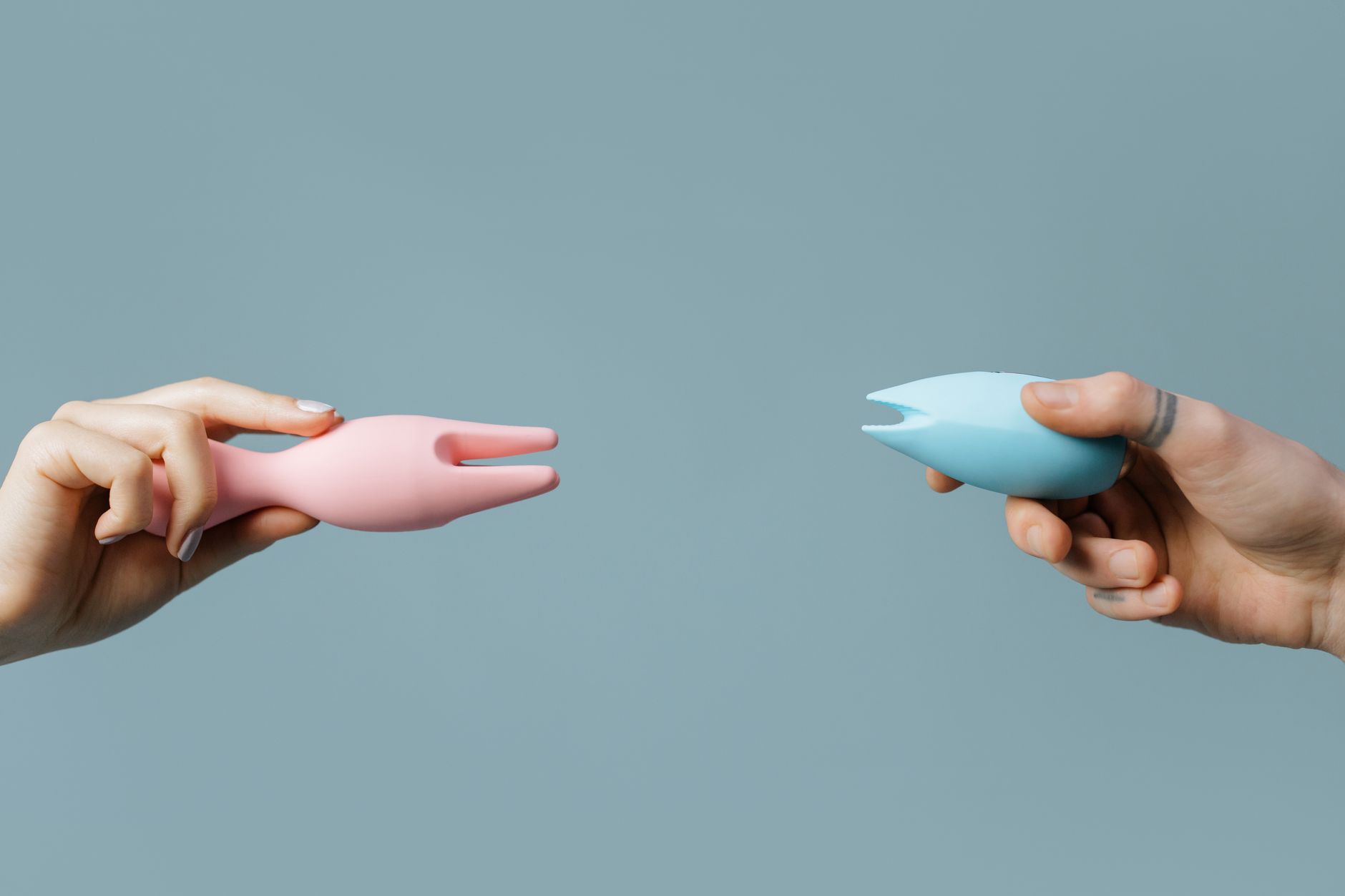
The Lemon Lem's suction-based design actually works beautifully here because it removes the pressure for you to do anything except receive sensation. You're not performing. You're responding.
The three mindset shifts that actually help
First: reframe what's happening as your partner's job, not your failure.
Your partner's role isn't to make you orgasm. It's to create an environment where orgasms can happen. That's wildly different. If you're using a lemon clitoral vibrator with them, you're not saying "I can't come without this." You're saying "This is what my body needs right now, and I trust you to be cool with it." Partners who aren't cool with that are partners with their own stuff to unpack.
Second: let yourself be selfish about sensation.
Most of us are trained to check in with our partner constantly. How are you feeling? Is this okay? When you're trying to orgasm, that's the opposite of helpful. Your nervous system needs permission to ignore them for a few minutes and focus exclusively on what's happening in your body. That's not cruelty. That's neuroscience.
Third: separate the orgasm goal from the intimacy goal.
You and your partner can have incredible closeness without an orgasm happening. You can also have an orgasm that feels isolated and disconnected. Conflating the two is what gets couples stuck. Some nights you'll orgasm together. Some nights you won't. That's information, not failure.
The practical setup that removes pressure
Here's what I recommend to people dealing with this exact issue.
Start with a conversation before you even use a lemon vibrator together. Not in bed. Over coffee or dinner. Say something like: "My body sometimes struggles to relax when I feel like I'm being watched, and it's not about you. I want to try using a vibrator with you because it helps me focus on sensation instead of performance. I need you to know this isn't a reflection on how I feel about you." A partner worth keeping will hear that as "I want this experience with you."
Use the vibrator first solo a few times. Figure out which pattern works, how long you typically take, what your breathing does. This isn't procrastination. It's data. When you know your own rhythm, you're less in your head when a partner's present.
Start with your partner present but not involved. They can be reading, working, just existing in the room. This sounds anti-climactic, but it's genius. Your nervous system gets used to being observed without the pressure of performance. After a few times, your amygdala learns: observation does not equal threat.
Only then move to direct involvement. Your partner might touch you elsewhere while you use the lemon clitoral vibrator. They might watch. They might use it on you. The key is that you control the intensity and patterns. You're not handing over your pleasure. You're sharing it.
When to use which patterns on The Lem
The Lemon Lem has multiple intensity levels and patterns for exactly this reason. Performance anxiety often means your nervous system is already ramped up. Start at pattern one or two, not the max.
Low patterns give your body time to downshift from sympathetic activation (fight-flight-freeze) back into parasympathetic mode (rest-digest-pleasure). This usually takes about five to ten minutes. Jumping to high intensity immediately will actually delay orgasm because your nervous system is still in defense mode.
Once your breathing slows and you feel your shoulders drop, you can increase. But here's the thing: you might not need to. Some of the deepest orgasms happen at lower intensities when your body is actually relaxed enough to receive sensation fully.
If you're with a partner, let them know your plan beforehand. "I'm going to start low and work up. Don't interpret that as hesitation. That's just what works for my body right now." Clear expectations mean fewer interruptions and less mental chatter.
What happens if the orgasm still doesn't come
It might not, and that's information, not failure.
Sometimes our bodies need three sessions, ten sessions, or more to unlearn the performance response. Sometimes it takes time away from pressure entirely. Sometimes the issue isn't about the vibrator at all. It's about a relationship dynamic that needs attention, or stress outside the bedroom that's too loud to ignore.
If you've given this a genuine try for a few weeks and nothing's shifting, two things are worth exploring: First, is your baseline stress level too high? If you're managing anxiety, grief, or major life transitions, your nervous system might just be in survival mode. That's real and it's not something a vibrator solves. Second, does your relationship have enough emotional safety? This sounds therapy-adjacent, but it's just honest. If you don't feel fundamentally safe with your partner, no amount of lemon vibrators will fix that.
The goal isn't to force an orgasm into existence. It's to remove enough barriers that pleasure can happen naturally. Sometimes that means using lemon sexual toys. Sometimes it means having a hard conversation. Usually it's both.
Building pleasure back into partnership
Using a lemon clitoral vibrator with a partner is actually a form of communication. You're saying: "Here's what my body needs. Here's how you can support that. Here's where I take the lead." That's vulnerability. That's trust. And paradoxically, those things often lead to deeper pleasure than performance ever could.
Start small. Go slow. Let your nervous system learn that observation and pleasure can coexist. The Lemon Lem is designed to help you do exactly that. Your orgasm isn't on a timer. Your partner isn't keeping score. You deserve to feel good without proving anything to anyone, including yourself.
People also ask
Why does my body tense up the second my partner enters the room?
Your amygdala activates when you feel observed. This is an ancient survival mechanism. In modern contexts, it often manifests as performance anxiety. Your nervous system interprets being watched as a potential threat, so it diverts energy away from pleasure and toward vigilance. This is completely normal and incredibly common, especially if you grew up with any messaging that female pleasure was conditional or secondary. The good news is that your nervous system can learn differently with repeated safe experiences. Using a lemon clitoral vibrator while your partner is present helps retrain that response because it gives your body evidence that observation doesn't equal danger.
Can using a lemon vibrator actually help me relax with my partner present?
Yes, but not because the vibrator is magic. The vibrator gives your attention something to anchor to besides your partner's reaction. Instead of monitoring their face and adjusting your performance, you're focused on sensation. Over time, as you successfully relax and experience pleasure in your partner's presence, your nervous system gets new data: presence equals safety. The repeated experience of having an orgasm while they're watching rewires the neural pathway that previously shut you down.
What if my partner feels weird about me using a lemon vibrator during sex?
That discomfort is worth exploring together. Sometimes partners worry it means they're not enough, or they feel excluded. A simple reframe helps: you're not replacing them. You're inviting them into your pleasure in a new way. If your partner continues to resist or make it about their insecurity, that's actually useful information about the relationship's emotional safety. A secure partner wants your pleasure, even if the tool for achieving it looks different than they expected.
How long does it usually take to feel comfortable with a partner watching?
It varies widely. Some people shift in three to five sessions. Others need weeks or months. The timeline depends on your baseline anxiety level, relationship trust, and how deeply ingrained the performance response is. The key is consistency without pressure. You're not trying to force a timeline. You're creating a pattern of safe experiences that your nervous system gradually learns to trust.
Should I orgasm every time I use a lemon vibrator with my partner?
No. That's another trap. Sometimes you'll orgasm. Sometimes you'll get close and decide you're satisfied. Sometimes you'll use the vibrator and it'll feel good without going anywhere. The goal is pleasure and connection, not orgasm confirmation. If you tie every session to orgasm, you've just created a new performance metric. The vibrator becomes a tool for achieving something instead of experiencing something.
Is it normal for orgasms with a partner to feel different than alone?
Completely normal. The physiological response is the same, but the psychological context changes everything. With a partner, you might feel more self-conscious, more pressure to perform, or less able to focus. Or you might feel more connected, more supported, more present. Different doesn't mean worse. It's just different. Using a lemon clitoral vibrator can help bridge that gap by giving you a tool that feels as reliable with them present as it does alone.