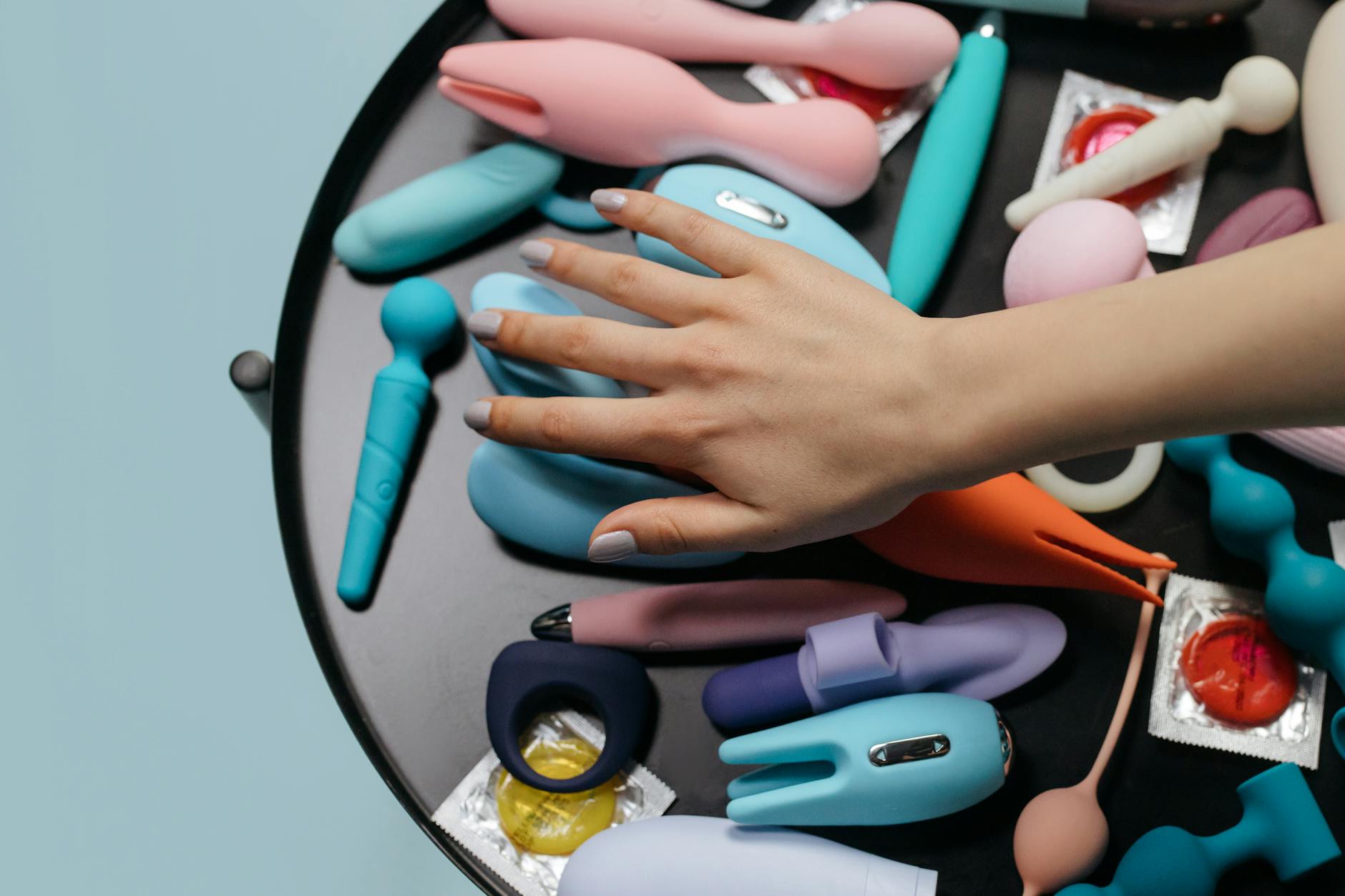
Let's name the thing nobody talks about
You're with your partner. Everything feels good. And then somewhere in your body, a little voice whispers: "Am I taking too long? Do they get tired? Should this have happened by now?" Suddenly the pleasure switches off like someone flipped a switch. Your body tenses. Your mind leaves the room.
This is performance pressure, and it's one of the fastest ways to kill an orgasm that was heading straight for you. The irony is brutal: the harder you chase it, the further away it runs.
Why the pressure happens (and why it's not your fault)
Performance anxiety around orgasm isn't a personal failure. It's often inherited from a culture that treats orgasm like a finish line instead of a sensation. Add in the fact that most people with vulvas take longer to reach orgasm than their partners (which is biologically normal, not a glitch), and suddenly you're working with a fundamental mismatch between how your body works and what you believe you should be able to do.
Then there's the relational layer. You might worry about seeming broken. Or selfish. Or like you don't want them enough. None of these things are true, but the thoughts loop anyway, firing your nervous system into sympathetic overdrive. Blood leaves your genitals. Arousal flattens.
Here's what research on sexual response tells us: orgasms happen in parasympathetic nervous system states. That means you need to feel safe, unjudged, and unhurried. Performance pressure cranks up your sympathetic system (fight or flight), which is literally the opposite of the neurological conditions you need for pleasure.
How lemon clitoral vibrators break the pressure cycle
This is where a tool like the Lem becomes genuinely useful. It's not that the vibration magically fixes anxiety. It's that the suction sensation on the clitoris is powerful and direct enough that it bypasses some of the mental noise.
When you're using a lemon clitoral vibrator with a partner, a few things shift:
1. The vibrator becomes permission. Your partner now sees evidence that you're engaged in your own pleasure. It's not on them to make something happen to you. The dynamic moves from "Can I produce an orgasm for them?" to "What do I want right now?" That's a completely different headspace.
2. Sensation crowds out the self-talk. The Lem's suction technology creates a sensation so distinct that your nervous system pays attention to it instead of your anxious thoughts. You're not thinking about whether it's "taking too long." You're tracking the pattern, the intensity, what your body wants next.
3. The timeline vanishes. With a lemon vibrator in the picture, there's no implicit "this should happen by X minute" anymore. You're both just present with sensation. Sometimes that leads to orgasm in three minutes. Sometimes it takes twenty. Either way, you're no longer measuring yourself against an invisible clock.
How to introduce it without triggering more pressure
Here's where the framing matters. If you say, "I want to use this because I'm too slow," you've just doubled down on the shame. Instead, try something like this:
"I want to explore what feels best for my body, and I think having you here while I do that would feel really good."
Or: "I want to use this toy with you. Not instead of you. With you. It's another thing we can do together."
That second one matters because it redefines the toy from "fix" to "additional pleasure." The Lem isn't medicinal. It's an option. Your partner can hold it. You can hold it. You can take turns with the patterns. You can use it for foreplay and then set it aside.
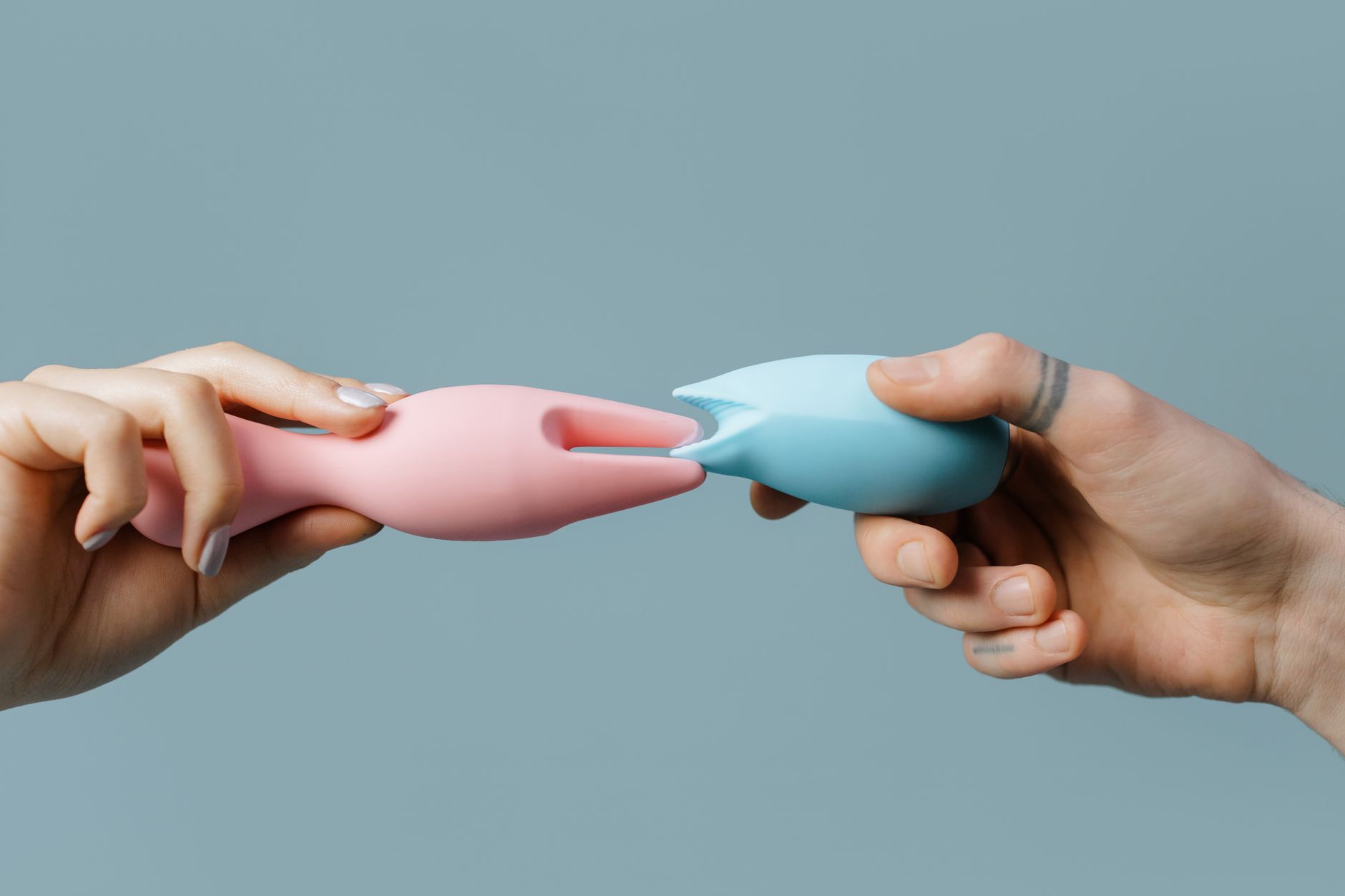
Photo by cottonbro studio on Pexels
The actual mechanics matter too. When pressure is high, start at a lower intensity pattern on the Lem. Pattern 1 or 2. You're not trying to jackhammer your way to an orgasm. You're exploring what feels good with the nervous system in a calmer state.
Want to use it solo first? Do that. Especially if the pressure feeling is new. Spend two or three solo sessions with the lemon clitoral vibrator where the only goal is noticing what patterns you like, what pace feels good, what happens if you relax your pelvic floor completely. This isn't training for partnered sex. It's data gathering for your own nervous system.
The conversation with your partner that actually helps
After you've used the Lem alone a few times, you might say something like: "I noticed something with the vibrator. When I'm not worried about anything, my body responds differently. I want to try that with you here, but I need to know I don't have to perform. Does that make sense?"
Then: "I might come in thirty seconds or thirty minutes. Both are fine. What matters is that you're here and I'm not in my head about time."
This is not sexy talk. This is boring, practical relationship talk. And it's also one of the most intimate conversations you can have because you're asking your partner to care about your pleasure more than about whether they get to witness an orgasm.
If your partner has their own performance anxiety about "giving" you an orgasm, this conversation helps them too. It takes them off the hook. They no longer have to fix you or produce results. They just have to be present.
What changes when you finally relax
The first time you use a lemon vibrator with a partner and you're genuinely not performing for them, something obvious happens: your body opens up. Blood returns to your genitals. Your arousal builds instead of flatlines. And here's the thing that surprises people: the orgasm often comes faster once you stop gripping for it.
This is not coincidence. This is your nervous system doing its job.
Some people find that after a few partnered sessions with the Lem where the pressure is off, they can have orgasms with their partner without the vibrator at all. The pressure lifted. The nervous system learned it could relax. Sensation became available again.
Others use the lemon clitoral vibrator every single time, and that's perfect too. There's no timeline here where you're supposed to "graduate" away from needing a tool. You need what you need.
FAQ
What if my partner thinks I need the vibrator because they're not enough?
That's often about their own insecurity, not about the toy. A conversation helps: "This isn't about you. My body just responds better when I'm not in my head. The vibrator helps with that. And honestly? I like this better because you're part of it." If the insecurity persists, that's worth exploring together, possibly with a relationship therapist.
Can I use a lemon clitoral vibrator if I feel numb during sex with my partner?
Yes. Numbness often shows up because anxiety has dampened sensation. The Lem's direct suction stimulation can help reawaken sensation that feels blocked. Start with a solo session first to make sure the vibrator itself works for your body, then bring it into partnered time.
What if I'm still anxious even with the vibrator?
The vibrator helps create conditions for relaxation, but it's not a bypass for underlying anxiety. If you're still in your head even with the Lem, that's worth addressing separately, either with breathing work, mindfulness practice, or therapy. The vibrator is a tool. Your nervous system is the real player.
Is it okay to use a lemon vibrator if my partner has never seen me with a toy?
Yes, though the introduction matters. Unexpected toys can feel jarring. Give them a heads-up. Show them. Let them ask questions. Let them hold it and see how it works. Demystifying it usually helps.
How do I know if the pressure is the problem or if something else is?
Try this: use the Lem alone in a relaxed state. If you come easily and pleasurably, pressure is probably your main issue. If you still feel stuck, there might be something else going on (past trauma, medical factors, relationship disconnection). In that case, talking with a therapist or sex-positive healthcare provider helps.
What if orgasm still doesn't happen even without the pressure?
Sometimes pleasure matters more than the destination. If you're relaxed, sensation is alive, and you're present with your partner, that's success even if it doesn't end in orgasm. Letting go of the need for it to happen sometimes paradoxically makes it more likely. But if this is new for you, talking with someone trained in sexual health is worth considering.
The real shift
Performance anxiety isn't something you fix with a better tool or a perfect technique. You shift it by changing the agreement between you and your partner about what sex is supposed to be. It's not a test you pass or fail. It's not a finish line. It's sensation. It's connection. It's your body doing what it does in a nervous system state that feels safe.
The Lem helps because it makes that shift visible and tangible. You're both looking at the toy. You're both tracking sensation. You're both offline from the pressure script that usually runs.
Once your nervous system learns that pleasure can happen without you performing, everything else gets easier. And that learning often starts with one conversation and one time using a lemon clitoral vibrator where nobody's keeping score.
Ready to explore? Check in with us if you want to talk through what might work for your situation.
References
Brotto, L. A., & Basson, R. (2014). Group mindfulness-based cognitive behavioural therapy for women with provoked vestibulodynia. Journal of Sexual Medicine, 11(12), 3082-3093.
Bartlik, B., & Goldstein, M. Z. (2001). Maintaining sexuality in the older woman. Journal of Women's Health & Gender-Based Medicine, 10(10), 983-991.
Gottman, J. M., & Levenson, R. W. (2002). A two-factor model for predicting when a couple will divorce: Exploratory analyses using 14-year longitudinal data. Family Process, 41(1), 83-96.