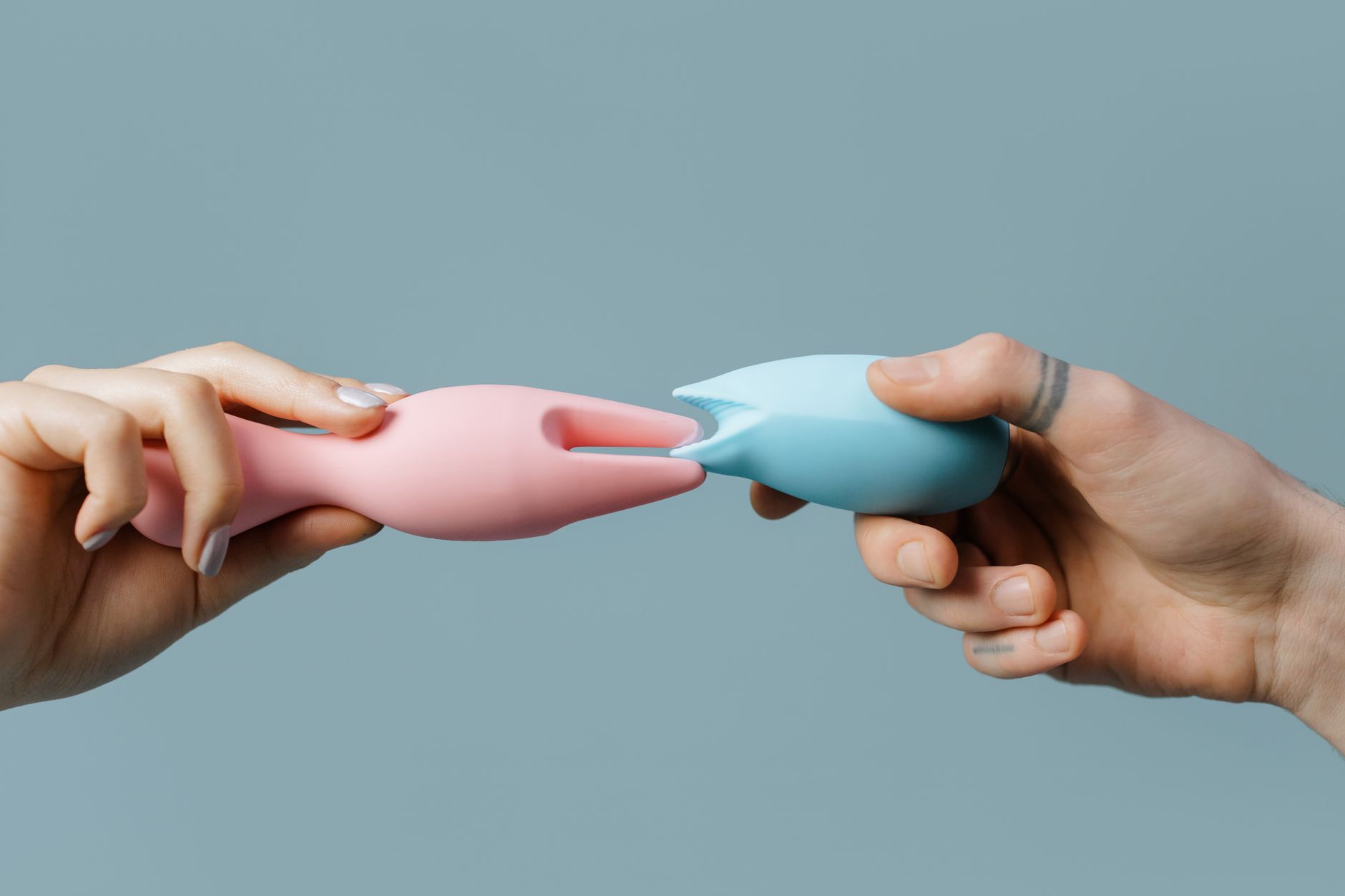
How to Use Lemon Vibrators When You Have Low Libido From Depression or Antidepressants
Depression flattens desire. SSRIs flatten it harder. Here's why your lemon clitoral vibrator still works, and how to use it when motivation is the real barrier.
Depression doesn't just make you sad. It metabolizes desire into nothing. Your body still works. Your nerves still fire. But the signal to care about anything, including pleasure, gets scrambled by the same neurochemistry that makes getting out of bed feel impossible.
Antidepressants save lives. I've seen them transform relationships that were drowning in hopelessness. But the sexual side effects are real and rarely discussed with honesty. SSRIs in particular flatten libido in ways that feel permanent, even when the medication itself is working brilliantly for mood and function.
Here's what I tell my clients: your capacity for pleasure hasn't disappeared. It's been buried. And a lemon vibrator can help you excavate it, but you need to approach it differently than someone without depression would.
Depression is a cascade of chemical events. Low serotonin affects dopamine regulation. Dopamine is what makes you want things. Without it, even things you used to crave feel like tasks. Add an SSRI to that and you get a paradox: you're mentally stable enough to function, but neurochemically incapable of feeling desire.
SSRIs work by increasing available serotonin in the brain. That's good. It stops the rumination loop and eases the fog. But serotonin and sexual response live in tension. Higher serotonin can dampen the dopamine surge that drives arousal.
The key part nobody emphasizes: this is biochemical, not psychological. You're not broken. You're not being sabotaged by your partner or your choices. Your medication is doing its job by design, and the cost is temporarily higher in the libido department.
For roughly 30 to 40 percent of people on SSRIs, libido rebounds after 3 to 6 months. For others, it stabilizes lower than baseline. Some find that combining strategies like timing intimacy to off-peak medication hours or adding specific doses of other medications helps. But in the meantime, you're left navigating sex and pleasure with the accelerator stuck.
A lemon clitoral vibrator is mechanical. It doesn't require you to generate desire. It generates stimulation, and stimulation can sometimes trigger arousal downstream, even when the top-down drive isn't there.
This is important: you don't have to feel turned on to use The Lem. You don't have to want it. You just have to show up to it. And that distinction transforms the entire experience from a failure to a tool.
Lemon vibrators, with their suction mechanism, work particularly well for this because they're forgiving of divided attention. You're not performing. You're not trying to maintain a rhythm or hit a target. The suction does the work while your mind sorts itself out. Many clients describe it as feeling held by the device itself.
The neural pathways for pleasure still exist. The clitoral nerve endings haven't disappeared. Depression and SSRIs are dampening the signal, not destroying the infrastructure. A lemon vibrator can sometimes work around that dampening, especially if you're not fighting it with performance pressure.
Honestly, the hardest part isn't the vibrator. It's the story you've built around wanting pleasure while depressed.
You feel broken. You feel like a bad partner. You feel like you're failing at something that's supposed to be fun. That narrative does more damage to arousal than the depression or medication ever could, because now you've layered shame on top of biochemistry.
Here's what I recommend first: separate sex from pleasure. Sex, for now, is not the goal. Sex can come later, after you've rebuilt the foundation. Right now, the goal is permission to explore sensation without the weight of performance.
Using a lemon vibrator when you have low libido from depression is radically different from using one when desire is present. You're not chasing an orgasm that should be happening. You're quietly investigating: what does this feel like? Not what should it feel like.
Set the bar low. Expectation is the enemy here. You're not aiming for multiple orgasms or earth-shattering pleasure. You're practicing the act of receiving sensation, which depression has taught you to reject. That's the win.
Four things that shift the experience when you're navigating low libido from depression or medication:
First, time it carefully. If you're on an SSRI, talk to your doctor about when you take it. Some people find that scheduling intimacy several hours after their morning dose gives them a narrow window of slightly higher arousal responsiveness. This isn't a hack for everyone, but it's worth asking about.
Second, lower the sensory load. Depression often comes with sensory sensitivity. Textures feel irritating. Noise feels invasive. Start with The Lem at the lowest pattern and intensity settings. You're not optimizing for maximum sensation. You're optimizing for something that feels good for ten minutes without exhausting your nervous system.
Third, commit to five minutes, not orgasm. This removes the pressure to perform. Five minutes of touching yourself with a vibrator. Not with a goal. Not with a timer. Just five minutes of showing up. Some sessions will lead to pleasure. Most won't, and that's fine. The practice itself is the point.
Fourth, separate medication conversations from intimacy conversations. Depression is isolating. You get scared that your partner will leave. You get angry at yourself for not wanting them. Then you turn that anger inward. Before using a vibrator, if you have a partner, talk to them about what's happening. "I'm dealing with medication side effects, and I want to rebuild intimacy slowly. I need your patience." That conversation matters more than the toy.
You shouldn't white-knuckle pleasure into existence. That's the opposite of what helps. If you use The Lem three times and it feels terrible, stop. Come back in two weeks. Depression already tells you that you're doing everything wrong. Don't add to that narrative by forcing something.
However, there's also a difference between "this doesn't feel good right now" and "I'm avoiding this because it feels vulnerable." Vulnerability and pleasure live together. Using a lemon vibrator while depressed means tolerating some discomfort in the name of rebuilding. But it should feel like a gentle stretch, not a punishment.
If nothing is shifting after eight to ten weeks, check with your doctor. Sometimes the medication needs adjusting. Sometimes adding a different medication specifically for sexual side effects helps. Sometimes you need to talk to a therapist who understands both depression and sexuality. All of those are legitimate paths.
Your partner might feel rejected. You might feel pressured to want them. This is normal and terrible and fixable, but only if you're honest about what's happening.
Introducing a lemon vibrator into a relationship where depression has already strained intimacy can help or harm, depending on how you frame it. The worst frame: "I need this because you're not enough." The honest frame: "I'm working on rebuilding my relationship with pleasure, which depression and medication have made harder. This helps me do that work."
If your partner can understand that you're not choosing a toy over them but rather choosing healing, something shifts. The vibrator becomes a bridge, not a replacement. And sometimes using The Lem together, with zero pressure to lead anywhere sexual, helps rebuild the sense of working on this as a team.
Many clients report that as they stabilize on medication or work through depression with therapy, their libido gradually returns. The timing varies wildly. But when it does come back, the work you've done with your body and a lemon vibrator becomes the foundation for a richer sexual life than before, because you've learned to show up without expectation. You know what pleasure feels like when you're not performing. That's valuable.
If it doesn't come back to baseline, that's also okay. Your baseline might be different now, and you can build pleasure and intimacy around that new normal. The Lem works at any baseline.
Right now, in this moment of flattened desire and medication side effects, you're not broken. You're not failing. You're managing one of the harder parts of being on SSRIs, and you're doing it with honesty instead of shame. That's strength. The vibrator is just the tool. You're the one doing the real work.
Yes. Depression doesn't break the nerve endings or the physical capacity for stimulation. What it does is flatten the desire signal. But you can use a lemon clitoral vibrator without wanting to. You can show up to sensation without feeling motivated by libido. This distinction matters because it means pleasure is still accessible even when depression has made you not care about anything, including sex. The goal shifts from seeking orgasm to practicing receiving sensation, and The Lem is excellent for that practice.
Not exactly. SSRIs dampen arousal responsiveness, which means orgasms might be harder to reach and might feel less intense when they happen. But the physical stimulation still registers. Some people find that their body does eventually respond to a lemon vibrator even when their brain isn't interested, because mechanical suction triggers nerve pathways that bypass the dopamine dampening. However, if you're very early on an SSRI, you might need patience. It can take weeks for your body to recalibrate to the medication and for pleasure pathways to reorganize around the new chemistry.
Your doctor doesn't need a play-by-play, but they should know you're struggling with low libido on your current medication. That's a legitimate side effect worth mentioning. They might suggest timing adjustments, adding a medication that specifically counters sexual side effects, or trying a different SSRI. Using a lemon vibrator is part of your self-care strategy, but medical support is crucial too. Don't treat the toy as a replacement for talking to your doctor.
Sometimes. Desire is complex and involves neurotransmitters, relationship dynamics, body image, and psychological history. A lemon vibrator can help rebuild the physical sensation part of the equation, but it's most effective when paired with therapy, possibly medication adjustment, and relational repair if your depression has strained your partnership. The vibrator is one tool in a larger toolkit.
It varies. Some people notice a shift in weeks. For others, it takes two to three months. Some never fully return to baseline while on SSRIs. This is one of the reasons talking to your doctor matters. If you're on week eight and feeling nothing, you might benefit from medication adjustment rather than more patience. There's no fixed timeline, but there is a point where you should escalate the conversation with your healthcare provider.
Completely normal. Depression numbs sensation. SSRIs can deepen that numbness. You might use a lemon vibrator and feel literally nothing except pressure or vibration, no pleasure at all. This is frustrating and disheartening, but it's not a failure. Your nervous system is regulated differently right now. Some clients describe it as feeling anesthetized. That doesn't mean the vibrator doesn't work. It means your nervous system needs more time or different support to register pleasure. Patience and professional help are both valid next steps.
Depression and antidepressant side effects are not permanent states. They're chapters, and chapters end. Right now, the goal isn't transcendent pleasure or multiple orgasms. The goal is rebuilding the pathways between your body and your mind, one gentle five-minute session at a time.
A lemon vibrator can help with that. But so can therapy, so can talking to your doctor about medication timing, and so can radical compassion for yourself while you're navigating this. You're doing hard work. The vibrator is just the most honest part of it.
If you want to explore this further or need guidance on rebuilding intimacy while managing depression, we're here to help. Reach out through our contact page.