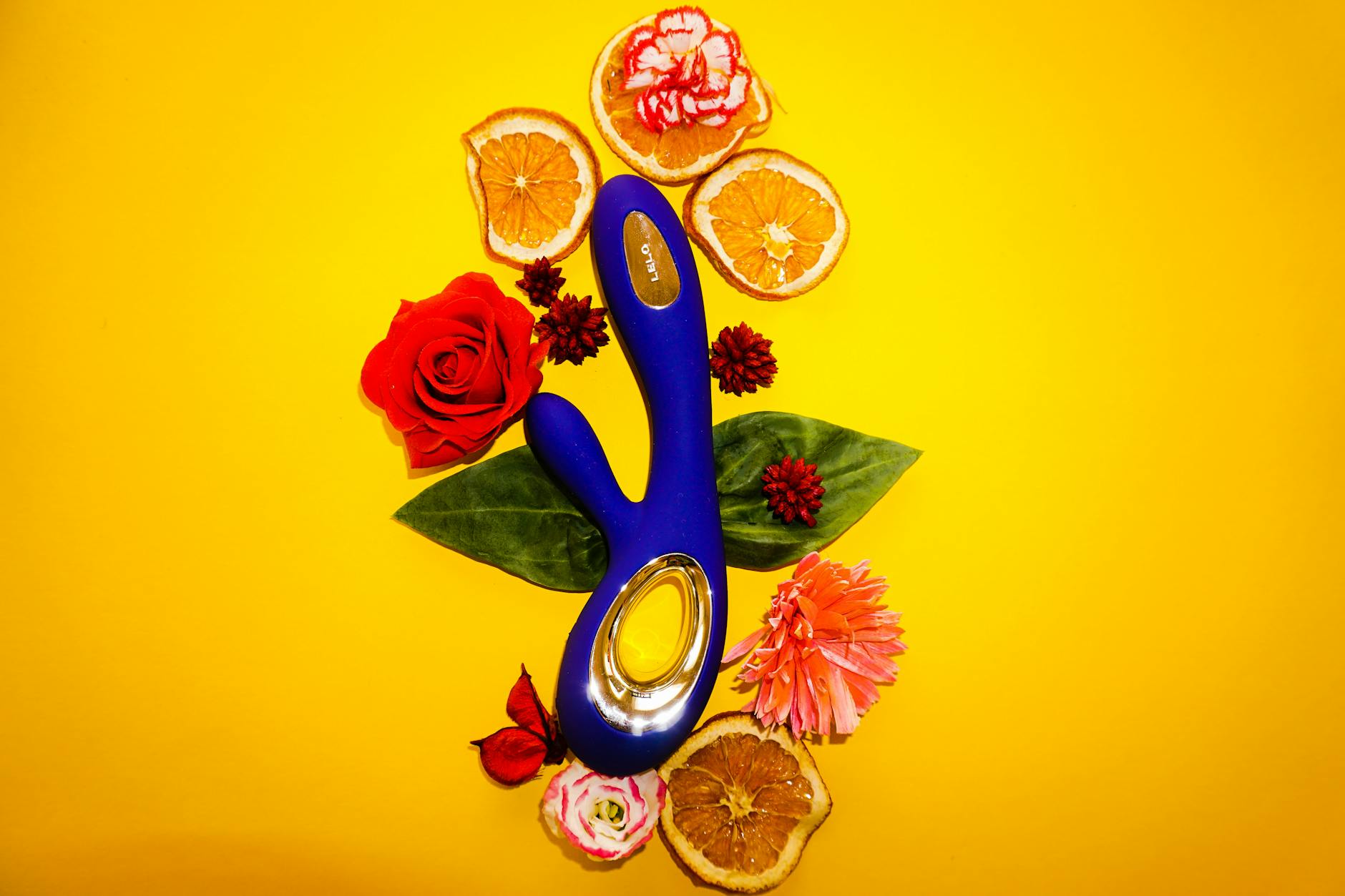
How to Use Lemon Vibrators When You're in Your Thirties and Discovering Pleasure for the First Time
You're not behind. You're not broken. Your thirties might be exactly the right moment to start exploring your body with a lemon clitoral vibrator. Here's how to begin.
There's this cultural story that everyone figures out their pleasure by 25. That's nonsense. I've worked with hundreds of clients who didn't start exploring clitoral vibrators until their thirties, forties, or beyond. Some grew up in environments where pleasure wasn't discussed. Others were too focused on relationships or career to prioritize their own body. Many simply didn't know where to start.
If that's you right now, here's the thing: your thirties are actually the ideal time to start. You have better self-knowledge than you did at 20. You're less likely to be performing pleasure for someone else. You probably have the financial freedom to buy something quality, and the emotional stability to actually use it without shame.
This is a beginner's guide to lemon vibrators, written for people discovering their clitoris as a site of intentional pleasure for the first time as an adult.
There are a lot of options out there. A lemon clitoral vibrator like The Lem is particularly smart for someone just starting out because it doesn't mimic anything. It's not pretending to be a penis. It's not a wand that was designed 30 years ago. It's a clitoral suction toy, and it works with your body's actual anatomy.
When you're a beginner in your thirties, you have an advantage: you probably already know something about yourself sexually. You know what kind of touch feels good on the rest of your body. You know whether you prefer intensity fast or slow. You know if you like direct contact or something lighter. That knowledge translates directly to using lemon vibrators.
Unlike vibration, which can feel harsh or overstimulating if you're used to gentler sensation, suction (the technology behind a lemon adult toy) mimics the way a partner might use their mouth. It's familiar-ish, but intentional and consistent in a way human touch can't be.
Let's get this out of the way: discovering pleasure in your thirties doesn't mean you've failed or missed something. It means you're choosing to prioritize yourself right now. That's not a consolation prize. That's a strength.
In my work with clients, the biggest barrier to pleasure isn't physical. It's the belief that they're supposed to want it in a certain way at a certain time. Some people feel shame because they never masturbated as teenagers. Others feel broken because they haven't had an orgasm yet. Neither is true. Your body isn't on a schedule.
Before you even touch a lemon vibrator, give yourself permission to be curious without pressure. You're not trying to have an orgasm on a timeline. You're not trying to match what you've seen or heard. You're just exploring what feels good in your body.
Here's the practical part. You've bought a lemon clitoral vibrator and you're not sure what to do next.
First, get to know it. Spend a session just holding it, looking at it, getting familiar with the shape and weight. You can read the instructions. You can charge it fully. This isn't wasted time; it's desensitization. You're training your brain that this is just an object, not something scary or weird.
Start with the lowest setting. When you do turn it on for the first time, use pattern 1 or 2. The lemon adult toys are designed with intensity in mind, and there's no prize for going straight to the top. You can always turn it up. You can't un-feel intensity once you've gone there.
Give yourself a full 15 minutes minimum. Arousal in adults takes time, especially if you've never masturbated before. Your body is learning a new sensation. That learning curve needs runway. Lie down somewhere comfortable where you won't be interrupted. You can use lubrication (water-based is always safe for silicone toys) or skip it on the first go. There's no right way.
Don't aim for an orgasm. This is crucial. You're not failing if nothing happens. You're learning. Some people have their first orgasm immediately with a lemon vibrator. Others take weeks or months. Both are completely normal.
People new to lemon clitoral vibrators often expect sensation to be one of two things: either it will immediately feel amazing, or it won't. Reality is more interesting.
The first few times you use a lemon vibrator, sensation might feel strange or numb. That's not a sign something is wrong. Your clitoris has 8,000 nerve endings, but those nerves don't all switch on at once. You might feel gentle pressure. You might feel a tingle. You might feel absolutely nothing the first time and something the second. All of this is fine.
As you keep exploring over weeks, sensation usually becomes more distinct. What felt vague becomes clearer. That's your nervous system recalibrating. The more you explore, the more you learn what you actually like.
Some people discover they like sustained pressure at one spot. Others like the motion patterns more. Some like shorter sessions; others want to build slowly over 30 minutes. None of this is universal. You get to figure out what works for your body.
Many people in their thirties are in relationships when they start exploring their pleasure. That conversation with a partner can feel awkward, but it doesn't have to be complex.
You could say something like: "I want to spend some time exploring what feels good to me. I'm going to use a vibrator sometimes, and I'd like your support with that." If they ask questions, you can answer them. If they get insecure, that's their work to do, not yours. Your pleasure is not a threat to your relationship.
Some partners find it hot. Others need time to adjust. A few get uncomfortable. If the discomfort doesn't ease with conversation, that might tell you something useful about the relationship itself.
You don't have to invite a partner into this exploration if you don't want to. Self-pleasure with a lemon adult toy is not something you owe your partner an explanation for.
Let's say you've tried a few times and nothing is happening. That's actually extremely common for adult first-timers.
First, check that you're not putting pressure on yourself. Orgasm anxiety is real, and it's productive of the exact opposite of orgasm. If you notice you're clenching or tensing, that's your nervous system being protective. That's not a flaw in you or the toy.
Second, consider what's happening in your life. If you're stressed, overworked, or dealing with relationship conflict, your body might not be ready to relax into pleasure yet. That's not failure. That's just neurobiology. You might need to address some of that context first.
Third, experiment with timing. Some people discover pleasure better in the morning. Others need evening when they're fully wound down. Some benefit from a bath first, or a few minutes of stretching. You're learning what your body needs.
If you're on medications that affect sensation (certain antidepressants, blood pressure meds, hormonal birth control), that can also change how your body responds. How to Use Lemon Vibrators After Starting New Medications covers that in detail.
Think of discovering your pleasure as something you're building over time, not something that needs to happen in one session.
Week one might be just exploration and getting comfortable with the object. Week two might be longer sessions. By week four or five, you might start noticing patterns. Maybe you like it more on certain days of your cycle. Maybe you prefer being in a certain position. Maybe you notice that alcohol or cannabis changes how sensation feels.
All of this is data about your body. Keep a mental note of what works. You're building a map of your own pleasure.
For many adult beginners, the real shift happens not from the toy itself, but from the permission-giving. You're telling your nervous system: "My pleasure matters. My body's sensation matters. I deserve to explore this." That mindset change often creates more sexual freedom than any physical tool can.
Completely normal. Your nervous system is learning a new sensation, and that takes time. Some people feel immediate response; others take weeks or months. If you keep the toy charged and accessible, and you revisit it without pressure, sensation usually becomes clearer over time. If after 6-8 sessions nothing has shifted at all, it might be worth checking whether something else is happening (stress, medication side effects, relationship anxiety) that's affecting your body's ability to relax into sensation.
That depends on your relationship and comfort level. Solo pleasure exploration is entirely your business. If you want to keep it private, that's fine. If you want your partner to know because it affects shared time or intimacy, then yes, that conversation is worth having. The key is that this is your choice, not something you owe them or something they get to control.
No. The opposite often happens. When you understand what feels good to your body, sex with a partner can become better because you know how to direct them. Pleasure is not a zero-sum game. Exploring your body doesn't deplete your capacity for partnered sex.
There's no schedule. Some people explore a few times a week. Others once a week. The goal isn't frequency; it's consistency and patience. If you're exploring, you're doing it right. You're not "supposed to" do it a certain number of times.
That's different from discovering pleasure slowly. Low sexual desire can be about your body, your relationship, your mental health, or sometimes all three. Exploring a lemon vibrator might help you understand your body better, but it's not a cure-all. If low desire is persistent, talking with a therapist who specializes in sexual health might be more useful than buying a toy.
No. There's only the narrative you've internalized that says there should be. People discover their pleasure across every decade of life. Starting in your thirties isn't late. It's when you're starting, and that's the only timing that matters.
Using a lemon vibrator as an adult beginner is simple. The real work is giving yourself permission. Permission to be curious. Permission to take time. Permission to explore your body without shame. Permission to want pleasure for yourself, not for a partner or because you think you're supposed to.
Your thirties are actually an ideal moment for that. You have enough self-knowledge to know what you like. You have enough independence to prioritize your own body. And you have enough time ahead of you to build a lifetime of knowing and enjoying your pleasure.
Start where you are. Use what you have. Begin now. The Lemon Lem is a tool, but the real permission comes from you.
If you have more questions about starting your pleasure journey or how to navigate this with a partner, reach out to us. We're here to help.