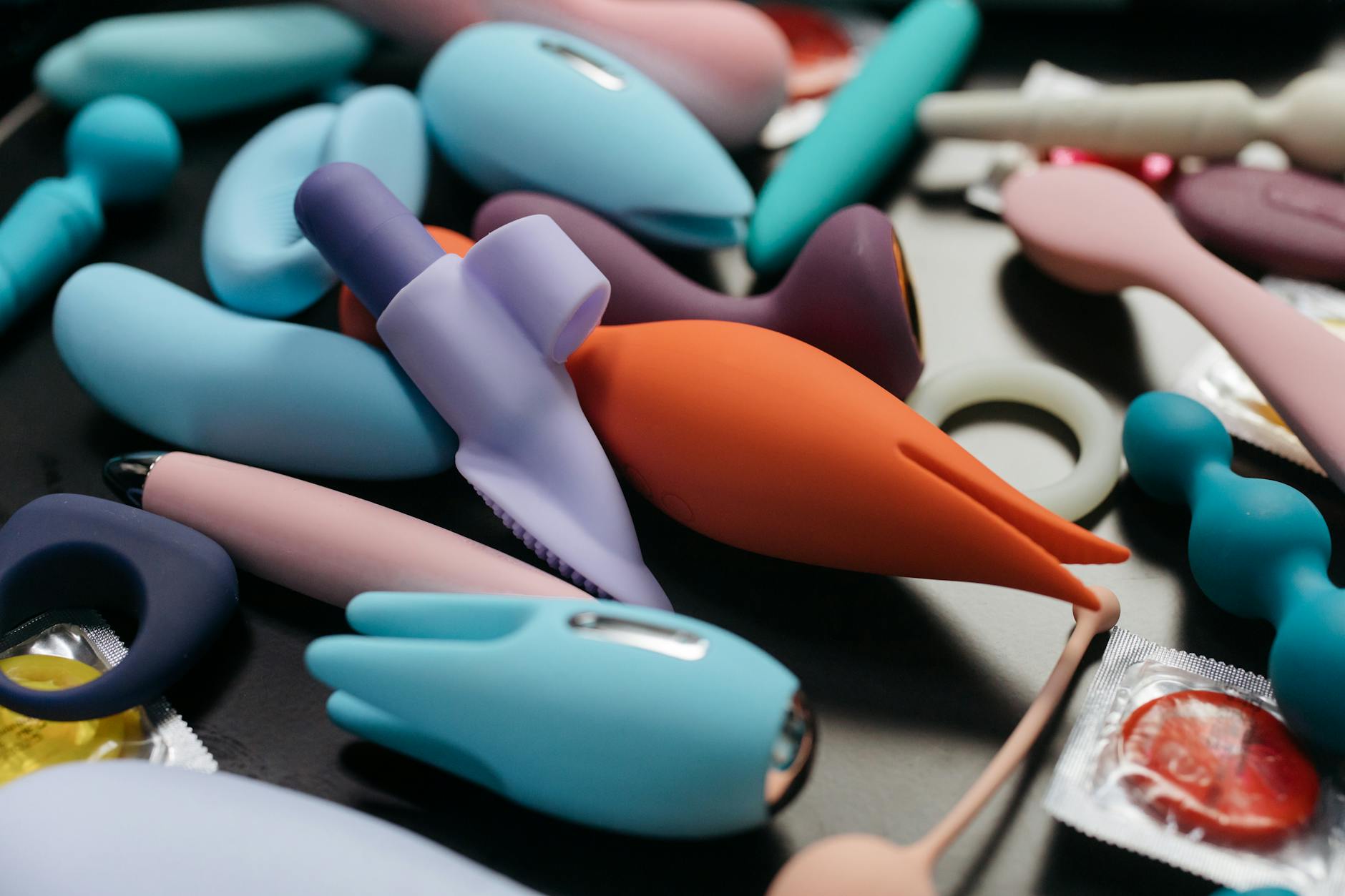
How to Use Lemon Vibrators When Your Partner Seems Uninterested or Resistant
Your partner isn't enthusiastic about toys yet. Here's exactly how to start the conversation, ease their worries, and build genuine desire instead of pressure.
Here's the thing. Your partner isn't resisting the toy. They're resisting the feeling that you're unhappy, or that something's wrong, or that they're not enough. Those are two completely different problems, and solving one without addressing the other will blow up in your face.
I've worked with hundreds of couples where one person wants to introduce toys and the other shuts down instantly. The resistance isn't logical. It's emotional. It lives in a place that facts and reassurance don't reach.
"You want this because I'm not satisfying you." This one sits underneath almost everything. Your partner fears inadequacy. A lemon clitoral vibrator, to them, reads as a report card they failed. They're not wrong to worry. If you lead with "I need this because you don't get me there," you've confirmed their fear.
"You'd rather have that than me." Replacement anxiety. They're imagining you alone with the toy, preferring it, needing them less. The intimacy math feels like subtraction.
"This means something's wrong with our sex." Toys register as a sign of a broken relationship, not an upgrade. In their mind, healthy couples don't need extra equipment.
"I don't know how to react or what's expected of me." Pure uncertainty. They don't want to do it wrong, hurt you, or feel left out. So they deflect with resistance.
"This feels weird, unsafe, or outside my comfort zone." And they don't have language for why, so they just say no.
None of these are about the toy itself. They're about connection, adequacy, and safety.
Don't start by showing them a lemon vibrator. Start by naming the emotional layer.
Find a moment when you're both calm and clothed. Not in bed, not aroused. Pick a time when you're already talking about something else."I've been thinking about us, and I realized I've been approaching something wrong. When I mentioned wanting to try toys, I think you heard it as me saying you're not enough. And I need you to know that's not what I meant."
Then actually explain what you mean. Be specific.
"What I want is more of you. Not less. I want longer sessions, different sensations, play that lasts. Right now sometimes I feel rushed, or like I have to choose between what feels good and keeping you feeling needed. I don't want to choose. I want both."
Or: "My body's changed. Sensation's different than it used to be. And instead of just accepting that, I want to explore it with you. Not around you. With you."
Or: "I'm curious. That's it. And I want you to be curious with me."
The key is moving away from "I need this because something's wrong" and toward "I want this because I want more with you."
After that conversation sits for a day or two, you can introduce the tool itself.
Don't ambush them with it. Don't pull it out during sex as a surprise. That's a fast track to feeling betrayed.
Instead: "I've been thinking about what we talked about. And I found something I want to show you, when you're ready. No pressure. Just want your reaction."
When they're ready, show them a lemon clitoral vibrator. The Lem is a good choice because it's genuinely beautiful. It doesn't scream "sex toy." It looks like elegant design. Say something like:
"This is called the Lem. It's designed to work with your body, not instead of it. It doesn't vibrate aggressively. It uses suction, so it's more like a sensation than a buzzing. I've been curious about what it would feel like together."
Let them hold it. Let them ask questions. Let them say no. All of that is okay.
Many partners who are resistant actually soften once they see the object itself. It's less intimidating than they expected. And if they don't soften, at least they've touched it and thought about it. That's progress.
Don't hand them the toy and expect them to "use it on you" like you've handed them a job. That puts pressure on them to perform and know what to do.
Instead: "Let's explore this together. You can hold it, or I can. We can experiment with where it feels good and what intensity works. This is about us trying something new, not about you doing it right."
Start with a lower intensity. Start with touch and kissing first. Build arousal before the toy even comes out.
When you introduce it, describe what you're feeling in real time. "Oh, that feels good. Let me show you where." Your pleasure feedback becomes communication instead of performance. It tells them they're doing it right, and it's inherently collaborative.
Many partners soften completely once they see that toys don't replace them. You're still touching. You're still talking. They're still part of the experience. The toy is just one more element, not a verdict on their adequacy.
Here's the hard part. Some partners will say no and mean it.
That's their boundary. And you get to have feelings about that.
You're not obligated to make peace with it instantly. But you are obligated to decide whether this is a dealbreaker. Not in a manipulative way, but honestly. In a long-term relationship, sexual compatibility matters. If your partner refuses to explore anything new or different, that's information about your future.
You don't get to nag them into permission. You also don't get to pretend you're fine with it when you're not.
The conversation then shifts. "I hear you. I respect that. And I also want to understand what we do next. Because this matters to me, and I don't want to resent you for saying no." Some couples find middle ground. Some realize they need a therapist to work through it. Some realize they're incompatible. All of those outcomes are legitimate.
Here's something that works with resistant partners: stop framing toys as a solution and start framing them as play.
"I don't want to fix anything. I want to have more fun. I want to try something new with you. That's it."
When you remove the problem-solving language and shift to curiosity and pleasure, some of the defensiveness dissolves. You're not saying something's wrong. You're saying something could be more interesting.
And it's true. A lemon clitoral vibrator isn't a correction. It's an invitation to experiment. To touch each other differently. To build new patterns.
That's actually what your partner wants to hear. Not "I'm broken and you can't fix me." But "I want to explore this with you because you matter."
That's a common misconception. Clitoral vibrators are actually designed for partnered sex. They're small, external, and they don't interfere with penetration or physical contact. In fact, many partners find that using a lemon clitoral vibrator together makes oral sex more comfortable and lets everyone relax into pleasure instead of focusing on endurance. When you reframe it that way, it becomes less "you instead of me" and more "a way for us to both feel good."
This is where specificity matters. Tell them exactly what you find attractive about them, and then explain the toy as an addition. "I love your body, I love touching you, I want that to keep happening. A toy doesn't change any of that. It just gives us one more way to feel good together." And then prove it by using the toy while you're still touching, kissing, and engaging with them. The toy becomes part of intimacy, not a replacement for it.
Always ask first. Surprising someone with a toy during sex reads as a violation of boundaries, even if you meant well. But you can ask in a low-pressure way: "I've been curious about something. Would you ever be interested in exploring toys together?" If they say no, you respect that and don't push. If they seem unsure, you can offer to show them pictures or videos first. Getting consent matters, especially when your partner's already resistant.
That's a gendered fear that needs a direct response. "Your masculinity isn't dependent on whether my body responds a certain way. Strong partners want their partner to feel good, period. And sometimes that means being creative and trying new things. That's actually confidence, not weakness." You might also suggest how lemon vibrators work better when you're coming off hormonal contraception or other resources that reframe toys as tools for mutual pleasure, not judgment on anyone's body.
Pay attention to tone. Real curiosity sounds different from resignation. If they seem hesitant, slow down. "I don't want you to say yes just to make me happy. I want to know if this is something you're interested in, even a little." Some partners need more time. Some need reassurance multiple times. That's not manipulation, that's the pace they need. Honor it.
One time isn't enough data. It takes 3-5 experiences for something new to feel normal. After the first time, check in. "What felt good? What felt weird? What would you want to do differently next time?" Show them you care about their experience, not just whether you got to use the toy. Often, partners relax into it when they realize it's not a one-time test they either pass or fail.
Your partner's resistance isn't really about lemon vibrators. It's about fear. And you can't logic someone out of fear. You can only address it with honesty, patience, and genuine care.
Start with the emotional conversation, not the toy. Name what they're actually worried about. Then, slowly and collaboratively, introduce the idea of play and exploration. Most resistant partners come around once they realize the toy isn't a judgment, it's an invitation.
If they don't come around, you'll have useful information. And you'll have given them real choice instead of pressure. That matters more than the toy ever will.